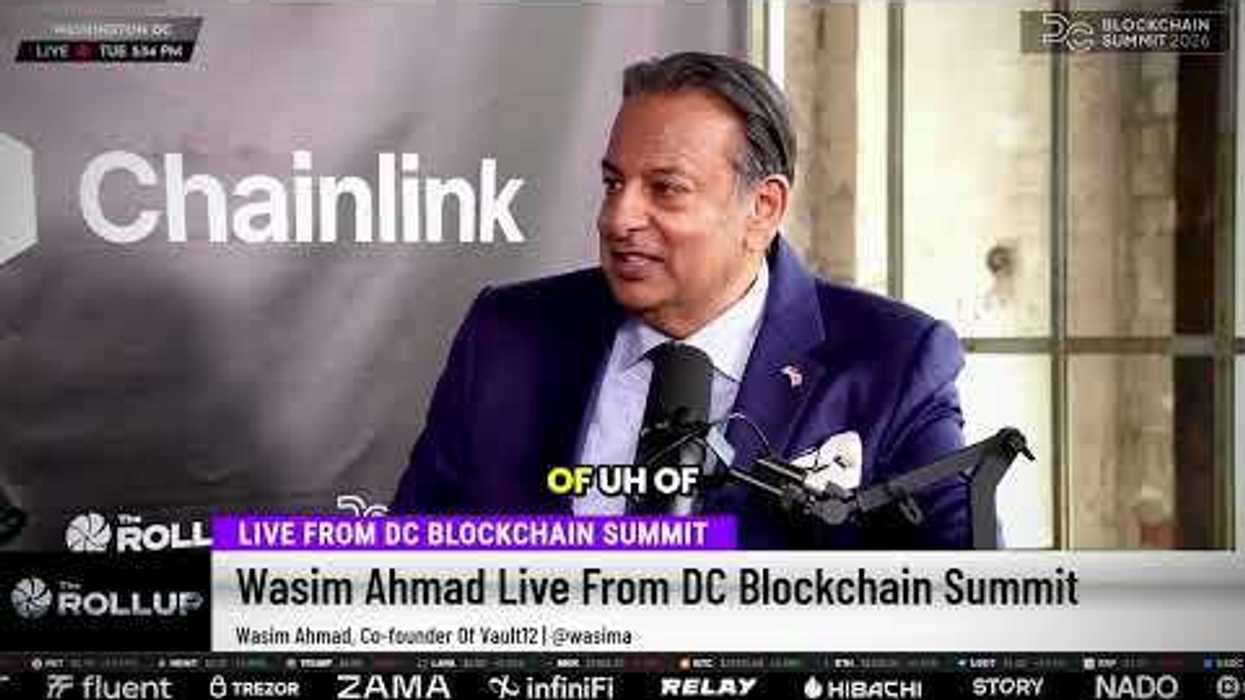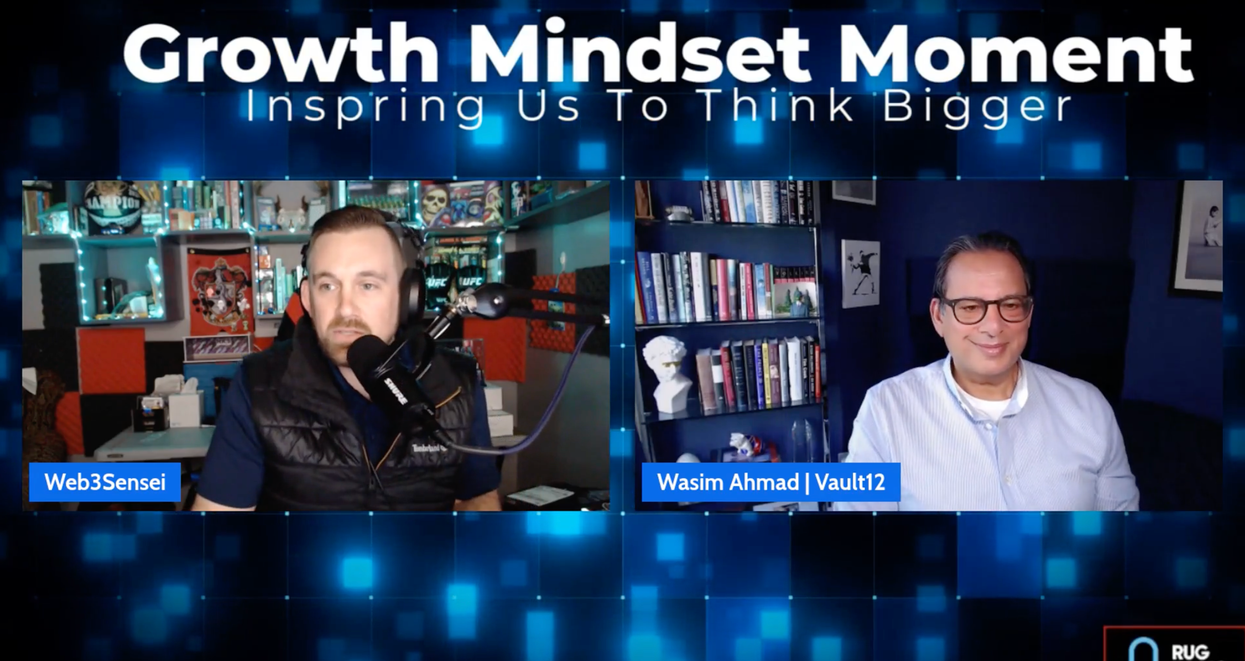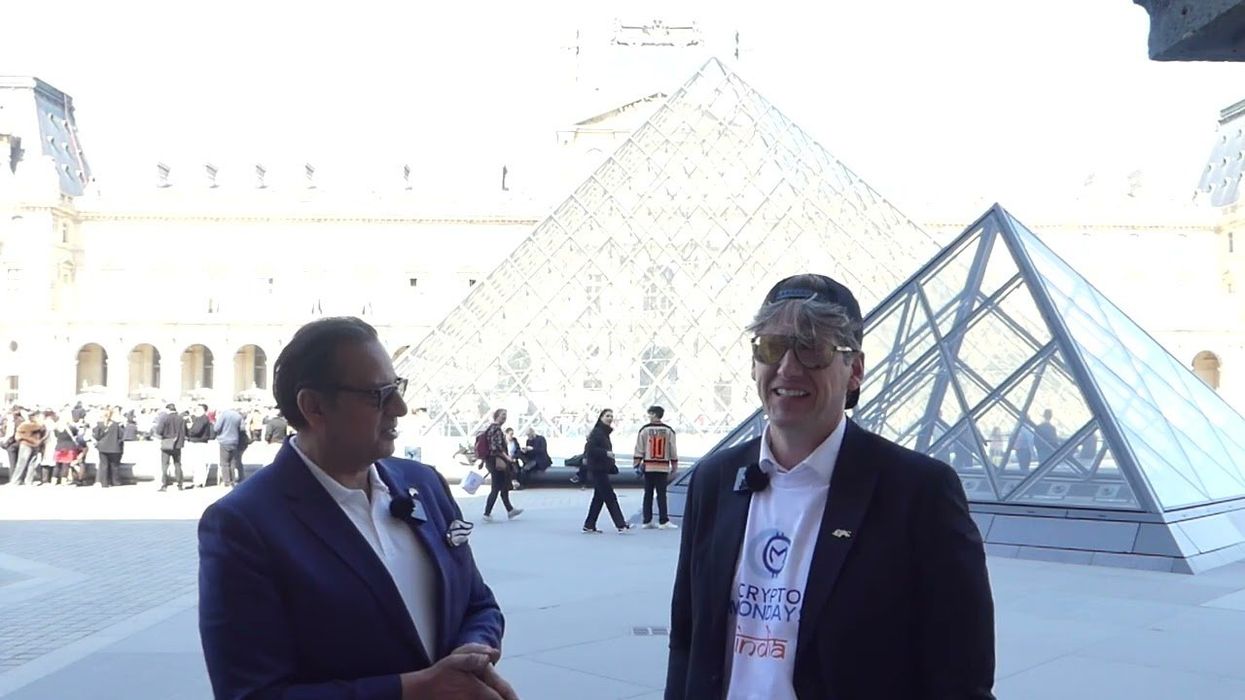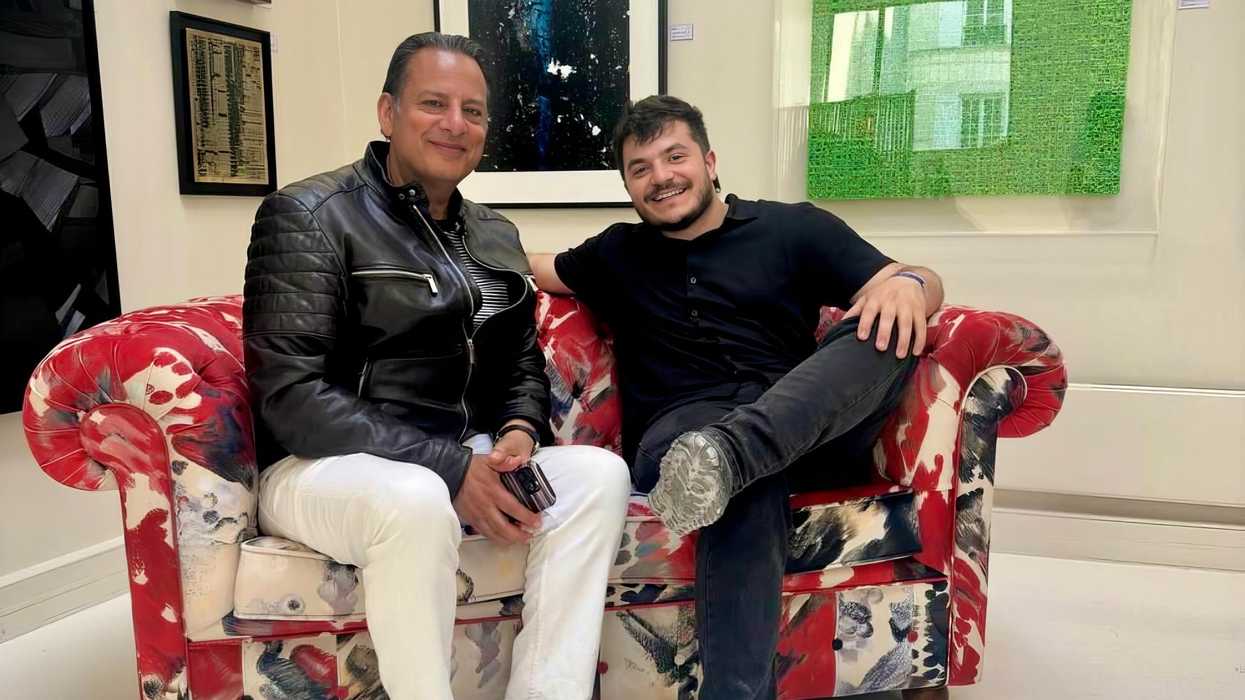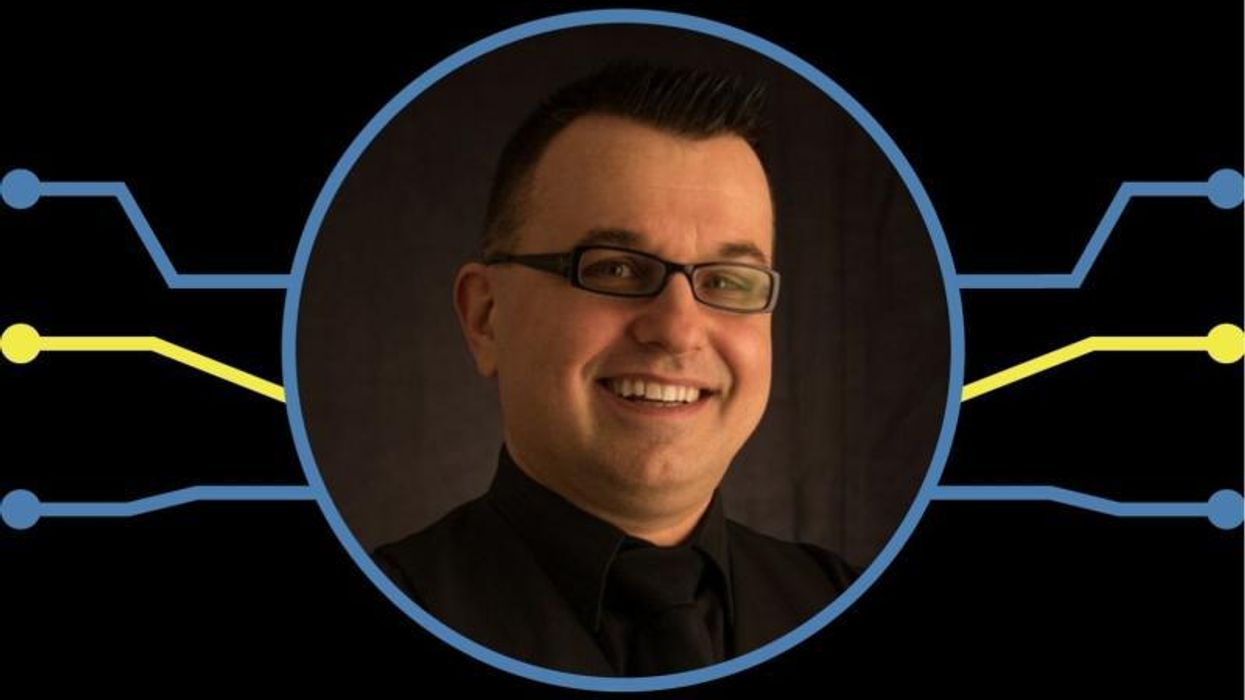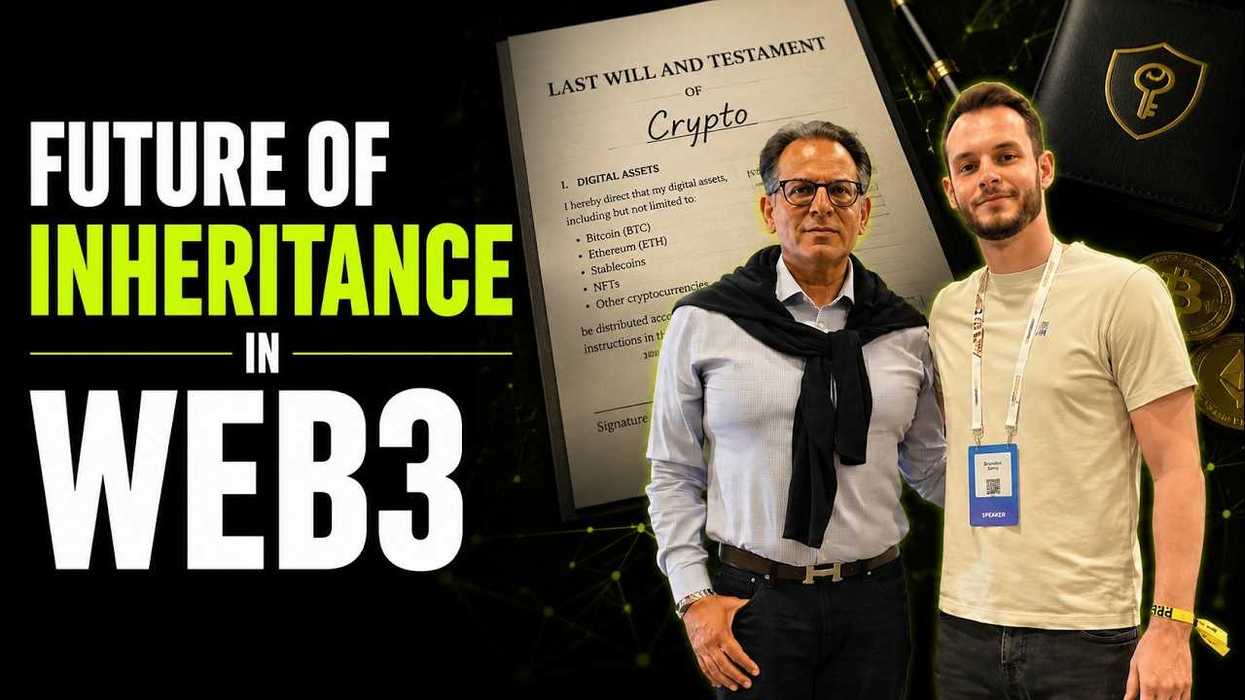
For episode 733 of the BlockHash Podcast, host Brandon Zemp is joined by Wasim Ahmad, CEO of Vault12. Vault12 is a non-custodial crypto security and digital inheritance platform. It enables cryptocurrency owners to protect and back up their wallet seed phrases, private keys, and digital assets (like NFTs) by distributing encrypted data shards across a decentralized network of trusted friends, family, and devices. #blockhashpodcast #vault12 #podcast. Brandon Zemp is the host and owner of the BlockHash Podcast. He's a Forbes Author, Amazon Bestseller, Investor, Entrepreneur and Blockchain educator.
⏳ Timestamps:
(0:00) Introduction
(3:11) Who is Wasim Ahmad?
(4:31) What is Vault12?
(6:05) Use-cases around crypto inheritance
(7:58) Next step for funds security in crypto
(10:40) Existing partnerships (12:32) Sumsub
(13:16) Public Investing (14:01) Thoughts on the Clarity Act
(19:25) Vault12 at Bitcoin2026
(22:03) Vault12 roadmap
🎙 Vault12 Links: 🔗 Website: https://vault12.com/ 🔗 X: https://x.com/vault12 🔗 LinkedIn:  / vault12 📢
Disclaimer: None of our content constitutes, nor is intended to act as financial advice. It’s important to always do your own research and due diligence before making any investment decision. Digital Assets and Cryptocurrencies are highly volatile and carry a considerable amount of risk. 📣 This episode is brought to you by Public Investing Paid ad. Brokerage services by Open to the Public Investing Inc, member FINRA & SIPC. This information is for educational purposes only and is not tax or investment advice. Consult your tax advisor for individual considerations. Crypto IRAs are self-directed individual retirement accounts offered and custodied by Alto Trust Co, a New Mexico trust company. Information about retirement accounts on Public is for educational purposes only and is not tax or investment advice. Visit the IRS website at https://www.irs.gov/ for more information on the limitations and tax benefits of IRAs. Crypto is highly speculative and involves significant risk, including loss of principal. Cryptocurrencies are not protected by FDIC or SIPC. See our Crypto Risk Disclosures at https://public.com/custodian-account-... for additional information. See terms of Match Program. Matched funds must remain in your account for at least 5 years. Match rate and other terms are subject to change at any time.
Transcript
Brandon Zemp:
Appreciate you taking the time today. How's it going? How's Bitcoin 2026 been treating you?
Wasim Ahmad:
Great, great. A lot of energy. A lot of good speakers yesterday.
Brandon Zemp:
Any in particular that you saw that were fun?
Wasim Ahmad:
Well, I mean Paul Atkins, that was pretty good. I think Kash Patel, I was expecting an announcement of some kind, something material, but they didn't release Roman Storm. They didn't release the Samourai Wallet guy. I don't know what else he was saying.
Brandon Zemp:
Was it mostly just regulatory talk a little bit and the landscape?
Wasim Ahmad:
I think it was about the future of the market, which is going to shift from what it is today with the original... the OGs from Bitcoin to all of the stuff that's happened with institutional investment strategy, all of those kinds of things. And now we're on the cusp of taking the very first step into a world where there's going to be a hundred million more retail crypto investors. And the only cryptocurrency that they know about is Bitcoin because there's a thousand others that they're not going to have been exposed to. Bitcoin is the brand of cryptocurrency and that's the one that they're going to jump on. We need that Clarity Act signed. We're in the business of crypto inheritance. We're the pioneers.
Brandon Zemp:
You're Vault12?
Wasim Ahmad:
Vault12. We started the company 10 years ago. My CEO was part of the blockchain team at Andreessen Horowitz, helped Coinbase get their funding and realized that if this exchange was successful, many, many people would buy cryptocurrency. Actually, Bitcoin was the only thing available at the time. And they would have to deal with all of the security backup issues and, what happens to your Bitcoin if you pass away or you're incapacitated or you're in jail? There needs to be all of those things that happened. We launched our app in 2019 right before the pandemic and then had to find a serious but a nice way to talk about how important it is to make sure you have backup, successful backups, successful plan for how your Bitcoin is going to get passed down.
Brandon Zemp:
So is that what Vault12 is all about? It's like a succession plan?
Wasim Ahmad:
Yeah, we are an app that gives you a digital vault. You put your information in there. Your information could be a video describing what the seed phrases are, or it could be the seed phrases or the private key. Anything in any digital form, that information is then encrypted, split into pieces and distributed to what we call Guardians. Guardians could be three of your friends, three of your family members, three of your professional contacts. And then you also, not only do you get to choose how many pieces, you get to say, "Well, when I need access to it, how many need to give me the okays?"
Brandon Zemp:
So it's multifactor?
Wasim Ahmad:
Yeah. So there's multiple parties that are involved. It's not multi-sig and it's not MPC. It's using Shamir's secret sharing, but we have smoothed it out and everything gets calculated and handled just through the app and you're not having to literally move a shard from one place to another.
Brandon Zemp:
Gotcha.
Wasim Ahmad:
So it's designed in a way that the people that are guarding your vaults are regular ordinary people, maybe not super, super technical.
Brandon Zemp:
That's interesting.
Wasim Ahmad:
And then one of them is going to be your beneficiary. And so when the time comes, they can ask for access to the vault.
Brandon Zemp:
Yeah. It's been a problem in this space for a long time and something that I think a lot of people have been concerned about. Even myself, what if something happens to me? My crypto is just oof in the ether. There's no succession behind that or guarantor. So this actually makes a lot of sense. Have you seen a lot of use cases with maybe parents or grandparents maybe wanting to take... My grandma owns Bitcoin. My parents own a little bit of crypto as well. I imagine this is something that they would be very interested in maybe even for like a trust or maybe even a business, I could see some applications. Have you seen any in particular that are used [inaudible 00:04:18]
Wasim Ahmad:
Yeah. I mean, the obvious one is obviously parents of Bitcoiners who also bought Bitcoin. So that's one. But I think the more interesting one is actually regular crypto investors because unfortunately many of them have passed away and there's some famous examples like Matthew Mellon, who is the heir to the Mellon Bank fortune and he had $2 million worth of cryptocurrency and very securely stashed away in multiple places, very good security, so good that it wasn't documented anywhere, obviously, and no one in his family knew how to access any of it. And it's all just locked, it's just out there somewhere. They didn't get any of it.
And then the third use case is something that it's a little more emotional and it's about the fact that some of us are at a point in our lives where our parents are declining and so we are helping them both with making sure their finances are in order, their wills are in order, maybe there's some health things that we're sorting out for them. And while we're doing that, it dawns on you, "Well, I better make sure that my staff is sorted too." And so because that's happening in their lives, they then deal with their own ahead of maybe when they normally would've talked about it. And that is actually one of the biggest use cases.
Brandon Zemp:
Yeah. I could see this being a next big step for security in this space too and being able to provide an alternative method in case something does happen. If I go into a coma tomorrow and I need my brother or my mom to be able to access funds to pay for my medical bills or something God forbid happens, it's good for us to have options like that and to have some kind of backend where that can occur in certain situations.
Wasim Ahmad:
But the trouble is there's a lot of bad options. So a lot of people will say, "Well, I gave a list of my wallets to my lawyer." "But did you write it down or did you put it on a US... How did you give it to your law firm?" And the security of that information is also important because anyone can rifle through a paper file and then drain your wallets. I mean, it's not going to be the lawyer, but it could be someone else. A lot of vendors out there in the wallet space will have solutions for backing things up. I mean, for the last... Over a decade, nine out of 10 wallets said, "Write it down," which is a ridiculous thing. All the people that wrote it down and then had their homes burned down in LA, they didn't recover their crypto wallets.
Brandon Zemp:
Or they write the wrong word. I've done that.
Wasim Ahmad:
Yeah. So a lot of wallets will say, "We'll back it up to the cloud." And that's a very convenient way to do it. I think in this day and age, I think we're all very comfortable with cloud security, but what we're not in control of is the relationship between that vendor and that cloud provider. And we all saw what happened with Gemini where they had a yield bearing account and they did that through two counterparties, Genesis... They had an issue with FTX and suddenly all our assets are frozen for 18 months with no hope of seeing them.
Luckily the Winklevosses fought and got all of that money back 100%, but it could happen to some other smaller vendor and you have no recourse. So putting stuff in the cloud is not a good option. And then a lot of people, well, in the past at Bitcoin conferences, they would have that ledger device around their neck and I mean, you can lose those. I'm not sure what your nephew's going to do with your ledger wallet if that's the only thing that's left.
So there's a lot of bad options or subpar options where you have to think through what are you going to do? And I think that having a good backup is the way to do it and then having a path forward for who gets access to that when something happens.
Brandon Zemp:
I agree. I imagine great partnerships for you probably are with existing wallets that are out there too because they have that exact kind of target market and client base that would cater for you guys very well. Have you worked on any partnerships with some software wallets?
Wasim Ahmad:
So we support any wallet that exports information that allows you to access the wallet. We support that, any blockchain. But the reality is the wallets are doing whatever wallets do, which is basically getting you to put information into the wallet and then getting you to buy cryptocurrency from the wallet. That is their business. They're not interested in some side thing, even though crypto inheritance is a dollar a day kind of revenue stream for them. So we think that the market for this particular service is once the Clarity Act passes and there's a hundred million new retail crypto investors, which will morph the number of cryptocurrency investors that exist today.
In the next few years, that is who is going to drive the market. The only thing they know about is Bitcoin right now and these are people who 17 years ago didn't know what any of this was, didn't buy anything, didn't buy anything five years ago, didn't buy anything 10 years ago and now they're going to buy it because they can buy it from Chase even though it's Coinbase behind the scenes that's probably providing the infrastructure or they're going to buy it from Citibank. They're all going to buy it from a wallet, some random wallet. They're actually going to buy it from the brands that they know and trust. And so that's where our efforts to set is partnering with TradFi institutions. Yeah. I think that's the bigger market.
Brandon Zemp:
What are your thoughts on the Clarity Act then in terms of maybe how that's going to change things when it eventually gets passed? I mean, I think the consensus is that it will draw a lot more of retail into the market that it hasn't already participated in crypto and a lot of it through these institutions and have been on the sideline waiting for a final degree of clarity to start pushing products up and ways for them to access this market. When you look at the Clarity Act, what are some initial thoughts that you have about maybe how that's going to impact maybe the market and the way retail gets involved going further, then how does that impact you guys with Vault12?
Wasim Ahmad:
Yeah. So we've been very, very involved in the last six years with the SEC directly and with all of the different bills that have made their way, didn't quite make it. Last year we wrote to the Crypto Task Force, laid out how Vault12 has a token that's used in the system to reward guardians and laid all of that out to say whatever regulations or guidelines you're thinking about, it needs to factor in these kinds of scenarios. Today, the only thing that people think about when they think of crypto apps is exchanges and wallets, we're neither. So we're something else and there's going to be a lot of other apps that are not exchanges or wallets that people need. And so that's what the Clarity Act is ushering in, that kind of innovation.
And I think what is really going to happen is we as part of the crypto industry, like all of the vendors that are here, we need clarity to continue with the vision that we laid out when we published our white papers 10 years ago. We need that clarity to finish delivering on all of that. But there are a whole bunch of unintended things that are happening. So not only is the government unclear about what you can and can't do for the agencies, there's all these other people that are part of the world we live in, like Google and Apple that control things like ad networks and app stores where someone might deliver an app for the cryptocurrency industry and they have their own rules. They've made up rules to say, "You can do this, but you can't do this."
Google won't let a crypto app advertise unless you're an exchange and have a money transmitter license, which makes sense or your hardware wallet. If you're neither of those, you cannot advertise and there's no rhyme nor reason as to why, other than caution and risk, but it's unintended things like that that are going to need to change. They have basically waged a war on crypto up till now and that's going to come to an end. So it's a different point of view, I know, but that combined with this influx of retail crypto investors and the pull in from the TradFi institutions. And I think there's still going to be plenty of room for brand new financial institutions, Robinhood is an example. Obviously Coinbase is going to have one of every type of financial product for retail. All of that is going to carry on going and then the TradFi is going to be catching up from behind.
Brandon Zemp:
Do you think given the fact that we're in a bear market right now after the, I guess cycle that we've had over the last year or two coming up, that this, if Clarity gets passed this year, and it probably will get passed, that that could be a nice resurgence for the market to I think get optimism going again and flowing and maybe turn things around? So I could see that as a real turning point to pull us out of this bear market cycle that we're in right now. Do you see it as also that opportunity for the market?
Wasim Ahmad:
Yeah. I mean, I think from a day-to-day perspective, yes, it'll be a moment of triumph. But I think in general when we talk about the market 10Xing, that will come as this material new delivery of new ways for people to tap into the Bitcoin economy, to the crypto economy and that will come as more participants enter the market. So I think that needs 12 months, maybe probably more like 24 months.
Brandon Zemp:
Or the more extended timeline, yeah.
Wasim Ahmad:
Yeah. I mean, the banks probably have to hire crypto experts and I don't think they're hiring right now. I'm not sure if they think they're going to do it with AI, but-
Brandon Zemp:
We know they're experimenting. I guess the biggest question is-
Wasim Ahmad:
They've been experimenting for a long time.
Brandon Zemp:
Yeah.
Wasim Ahmad:
Yeah.
Brandon Zemp:
I guess this question is like, are they on the sidelines waiting for Clarity to get passed so that they can be first movers?
Wasim Ahmad:
There's a whole bunch of things that they literally cannot do. I cannot talk to a bank right now, just in the corridors where there's no cameras, but I can't have a conversation with them about anything in the future and I think we need that to happen with Clarity and then all of the rules and... the rules that the agencies will then roll out, that needs to be rolled out.
Brandon Zemp:
I agree. So what brings you the Bitcoin 2026? What are you guys looking to do while you're here?
Wasim Ahmad:
Well, I was hoping that this would be the place where they announced the Clarity Act is going to the president's table so that isn't going to happen, but not because there's anything bad going on but just scheduling-wise. So that was the main reason and I think I just wanted to tap in. There was so much energy and vibrancy last year, I thought, "Well, yeah, let's go check it out."
Brandon Zemp:
You're just feeling out the culture and seeing what's on the horizon, listening to the speakers. Are you also looking for potential partners, other companies to work with?
Wasim Ahmad:
Yeah. I mean, I've been really looking at who is here now that's different to years in the past. And I've been working with a film director on a movie called The Bitcoin Executor. They've been showing the trailer in between speakers on the main stage and this is a great movie. It's not out yet, but you can check out the trailer.
Brandon Zemp:
Fictional movie or a documentary?
Wasim Ahmad:
Yes, it's a fictional movie. It's made by the people that made The Rise and Rise of Bitcoin, which was made 11 years ago and has... all the people that are doing the keynotes are in that documentary. This is a fictional movie, but Bitcoiners will love it because it shows different aspects of Bitcoin culture and there's just in the way that they shot it, they have beautiful Easter eggs, if you call it, just hidden away in the backdrops of the movie and all of the characters people will recognize, "Yeah, I know a guy just like that. I know someone who that's what they do." And so it's just like a fun project. It's about... the underlying story is based around inheritance, but it's a story about a person who doesn't really believe in Bitcoin and then goes on this journey because his friend disappears to go and find the beneficiaries of his wallet and discovers a new way of thinking about life through Bitcoin.
Brandon Zemp:
That's exciting. We don't get a lot of media that's solely about Bitcoin or crypto. We get little tidbits here and there in existing TV shows or a movie, but like-
Wasim Ahmad:
And they're generally negative, right?
Brandon Zemp:
Sometimes, yeah.
Wasim Ahmad:
They're criminals or someone's being kidnapped or there's money laundering-
Wasim Ahmad:
But this is something different. This is very positive, very contemplative. So check it out.
Brandon Zemp:
And then what's on the horizon for you guys here in 2026 with Vault12? Anything exciting coming up? Any announcements? What should we keep an out for?
Wasim Ahmad:
Well, probably the biggest thing that we're going to do this year is with the regulations that were announced in March in DC, which was, "This is what tokens are. These are the different types of tokens. This is how a token goes from one scenario to another scenario," that is all regulation. So that means that we can now finally list our token, which is needed to reward guardians. So we built everything so there was a reward mechanism in the system and we have had the token, but the previous SEC was like, "No, we think everything's a security. You can't be sending that around to people you don't know. That's not allowed." So we had to pull that functionality out, which is really not that great and now we're putting it back in and we are pursuing token listing. And I think hand in hand with the Clarity Act, it's really the new time to roll this out exactly as we laid out in our white paper in 2018.
Brandon Zemp:
Exciting. Well, yeah, timing I think is right. It's a good place to start having those conversations in a good period of time, I think this year. So I wish you guys the best of luck and continue to let me know when you guys have new updates. We'd love to do a part two and maybe have an extended conversation. And it's always difficult at these events. There's so much going on and so many adjacent interviews and flashing lights and whatnot.
Wasim Ahmad:
This was a unique interview.
Brandon Zemp:
Yes. Yes.
Wasim Ahmad:
We covered a lot of things.
Brandon Zemp:
We did. I appreciate the time. It's been great. Keep in touch. We'll do it again soon.
Wasim Ahmad:
Absolutely. Absolutely.
*** Special Offer for Podcast listeners Promo codes for Vault12 Guard
The iOS codes are good for 1 year subscription at no cost, then will revert to standard price for Inheritance plan. iOS codes can be redeemed in the Apple App Store.
The Android codes are good for 90 days subscription at no cost, then will revert to standard price for Inheritance plan. Android codes are redeemed when selecting and paying for the Inheritance plan in the app.
Instructions for how to redeem here.
Code: CMNYC26
iOS: https://apps.apple.com/redeem?ctx=offercodes&id=1451596986&code=CMNYC26
Android: Enter code CMNYC26 when you select the Inheritance plan

Wasim Ahmad
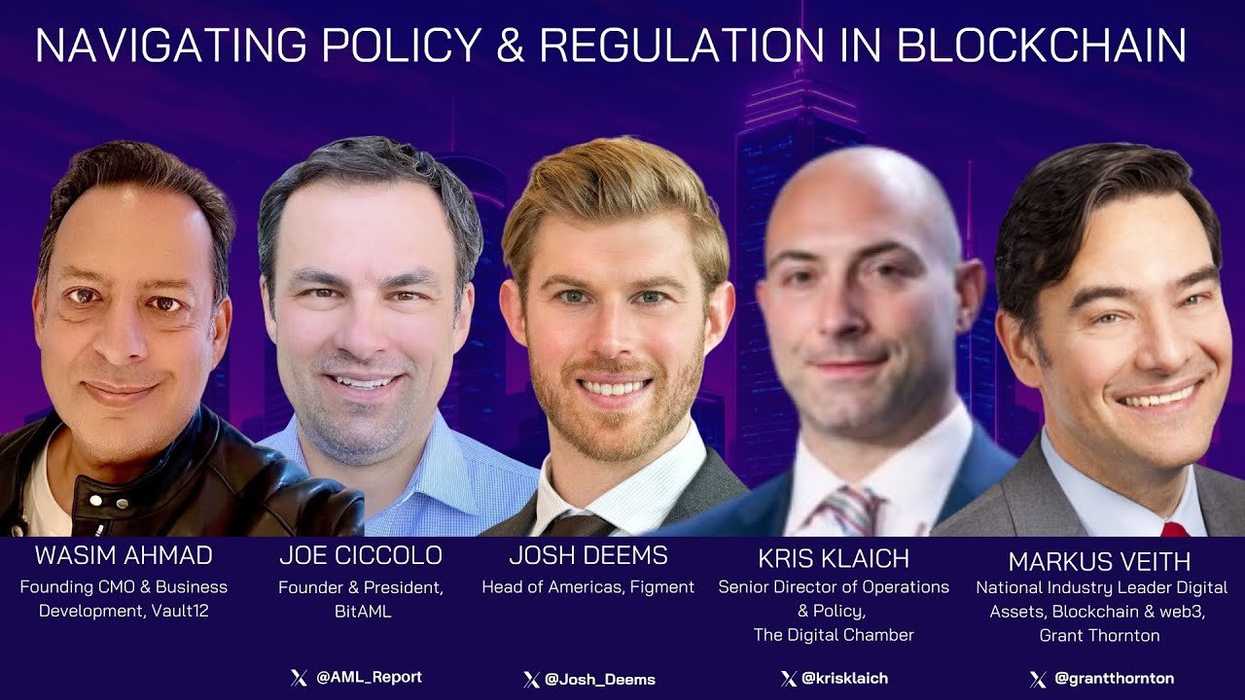
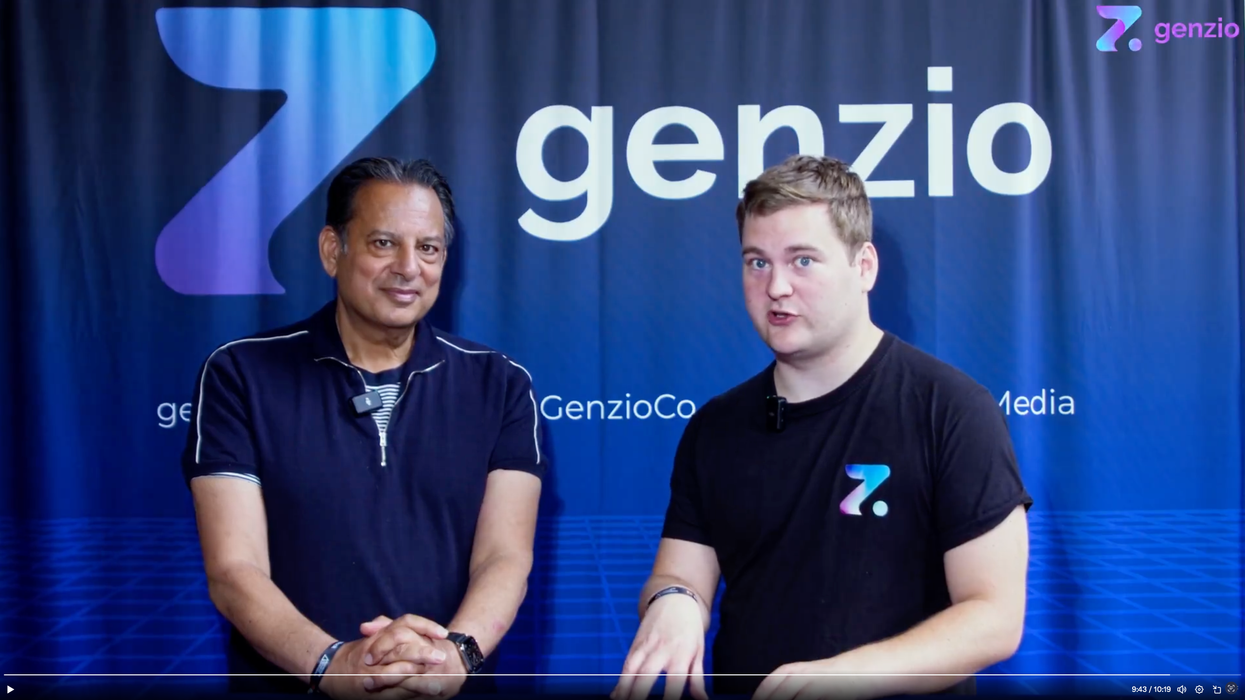
Wasim Ahmad has spent decades at the exact point where deep, difficult technology meets everyday people.
It started early. As a schoolboy in Britain in the 1970s, he was among the first children to learn Prolog, the artificial intelligence language. He went on to the University of Sussex to study Mathematical Physics, then switched to Physics and French so he could spend a year in Paris — an early sign of a career that would keep crossing between the technical and the human. After university, he was an astronaut candidate with the Juno Project, but was too young to be allowed into space.
In the 1990s he joined Synon, the British startup whose software-based code generation won the Queen’s Award for Technology, moving with the company to Marin County, California.
As a founding member of Voltage Security, a Stanford University spinout, he launched the first commercial email encryption built on Identity-Based Encryption — the first genuine breakthrough in public-key cryptography in thirty years — working alongside some of the world’s most renowned cryptographers, including Stanford’s Dan Boneh. When catastrophic breaches hit the payments industry, he helped launch end-to-end protection for the world’s payment systems using format-preserving encryption.
His crypto journey began with AlphaPoint, working with the founding team that launched some of the world’s first cryptocurrency trading exchanges. He then joined Vault12, the pioneer of crypto inheritance, where the mathematics of Adi Shamir’s Secret Sharing — became a product that lets people pass their digital assets safely to the ones they love.
Most recently, he has been lobbying hard in both the United States and the United Kingdom — engaging with the SEC, CFTC and the FCA — to evolve the laws and regulations governing crypto, so that everyday people can access these technologies safely and confidently.
He is now the author of a book on everyday cryptography: "Who holds the key?", an everyday guide to cryptography, passwords, crypto wallets, and navigating the technology that protects your privacy in the modern world.
The pattern across all of it is the same one that drives his book: taking complex technology and formidable algorithms, and shaping them into solutions that ordinary people can trust, understand, and use.
Wasim served on the board of non-profit, StartOut, and is a Seedcamp and WeWork Labs global mentor.
Wasim graduated with a Bachelor of Science in Physics and French from the University of Sussex.